
Share:


The Best Way Health Insurers Can Earn Back Consumer Trust
Survey says: it’s grievance time.
According to the 2025 Edelman Trust Barometer Global Report, we’re in a global grievance crisis. Heightened emotions and increased scrutiny have led to low levels of trust for health plans.
Here’s why:
- The national average satisfaction score for commercial health plans is 563 on a 1,000-point scale. If plans were graded in school, they’d earn a meager 56.3% score.
- Only 56% of consumers trust their health insurer to act in their best interests, which means 44% of consumers don’t trust them. Another failing grade.
- This dissatisfaction and distrust have now boiled over into grievance. As Ranjay Gulati and Alison Beard wrote in the Harvard Business Review, “We have slowly moved from a world of ‘I don’t trust you’ to ‘I hate you.’”

Photo by Vitaly Gariev on Unsplash
The immediate future doesn’t look good for health plans. The federal government has pulled the rug out from under them regarding Affordable Care Act subsidies, Medicaid cuts and Medicare. Carriers also face unprecedented pressure from providers, a rapidly aging population and a strained economy, to name a few challenges—all things outside their control.
In the squeeze from all sides, carriers must now make tradeoffs to remain afloat by revising pricing, cutting benefits, increasing cost-sharing and exiting markets. All these changes are only likely to inflame consumers’ disdain and distrust. Being open and honest about these challenges can help give consumers more context.
We’re stuck in a battle of consumers vs. carriers
Esther Perel, my personal relationship goddess, says all relationships have a cycle of connection, disconnection and reconnection. Right now, consumers and carriers are stuck in the disconnection phase. Both consumers and carriers are asking themselves, in the words of Esther, “HOW could they possibly be doing this AGAIN when they know how much it UPSETS me?”

Photo by Vitaly Gariev on Unsplash
Our sense of community has fallen apart
There’s a lot carriers can do to increase trust and satisfaction with members. McKinsey and other consultants have plenty of ideas about that. But one-to-one and even one-to-many efforts can only get them so far.
My solution centers around community, which we’re in sore need of as a society still grappling with post-pandemic fallout, loneliness and isolation and remote work. Too few of us mix and mingle with people in general, let alone those outside our bubbles. Retreating from society is bad for our biological wiring.
Back in our hunter/gatherer days, being excommunicated from the tribe meant sure death. That’s why loneliness is as dangerous to your health as smoking. While technology has made it possible to never leave your house to grocery shop, exercise or work, our brains haven’t caught up with this god-like technology and neither has society. There’s so much change happening at once while the amount of uncertainty and disconnection increases.
Collective experiences hold the answer
As Bréné Brown says, collective experiences—events shared by a group at the same time—are sacred because “they are so deeply human that they cut through our differences and tap into our hardwired nature…Not only do moments of collective emotion remind us of what is possible between people, but they also remind us what is true about the human spirit: We are wired for connection.” If carriers can create collective experiences that share joy, hope and pain, they can, as Bréné explains, “start to heal the wounds of a traumatized community.”

Photo by Nicholas Green on Unsplash
Ways for carriers to create community
If other downtowns are like Denver, empty storefronts and commercial spaces abound. Carriers can team up with commercial real estate developers and property managers to activate these dead spaces for the community with health and well-being experiences. Of course, carriers need to involve local communities to see what kinds of third spaces they most want and need.
Here are some thought starters:
- Convert industrial or large retail spaces into pickleball courts.
- Create indoor playgrounds and parks for communities to escape the heat or cold.
- Develop game clubs for puzzles, cards, board games or bingo.
- Hold free concert series in parks and community areas.
- Host community dances for families and adults.
- Offer group therapy or art-making classes to help people process emotions.
- Create community gardens in areas designated as food deserts or swamps.
Carriers would ideally offer these activities for free or at an extremely low cost. Lincolns, a hidden speakeasy in Denver, sells everything for $5. In today’s world, where the cost of living continues to skyrocket, $5 for anything, especially anything health and wellness related, feels like a steal.
The spaces themselves could be a give back to the community so nonprofits could use them for free or capture a portion of the entry fee as a donation for designated days or times.
Once carriers have re-established a positive reputation in the community, they could gradually introduce educational events around shopping for insurance, understanding how insurance works, learning about Medicare or Medicaid and meeting insurance sales agents. This should be done later so the community investment feels more authentic and less transactional.
How health insurance companies can give back
As the number of under- and uninsured Americans climbs, emergency rooms are expected to be hit hard, which will drive costs up in a vicious cycle. Carriers, especially payviders, payers who are also providers, have an opportunity to fill the gap.
Carriers like UnitedHealthcare, Humana, CVS Health, Elevance and Cigna each own hundreds of provider facilities across the nation via Optum, CenterWell, Oak Street, Carelon and MDLIVE. Here’s how they could use them:
- Offer a limited number of free virtual visits to uninsured people once a month.
- Turn their primary care facilities into free community clinics for one day a month or quarter.
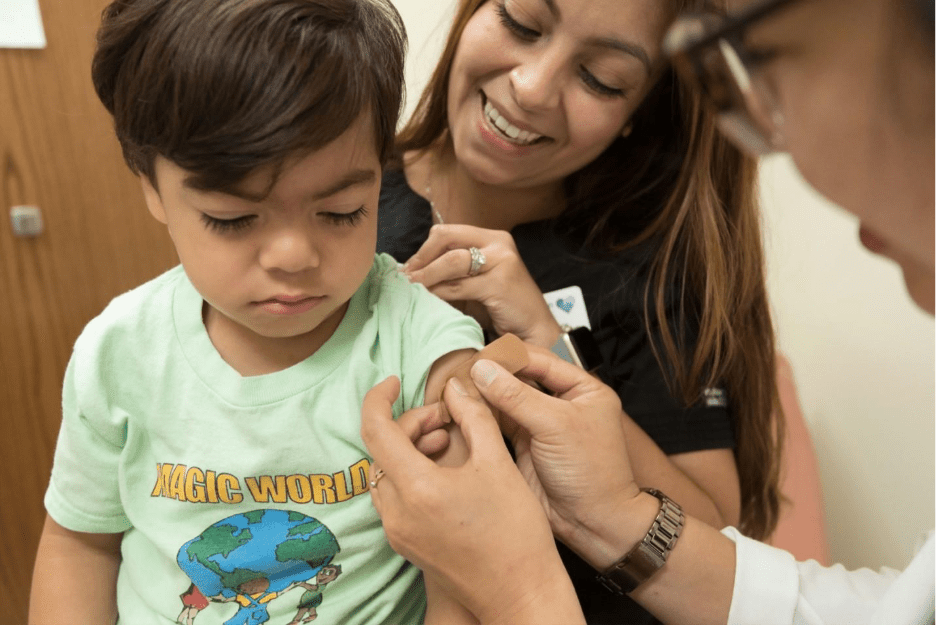
- Host a biannual health fair offering free screenings and vaccines once or twice a year.
If providers have medical buses or vans, they could offer pop-up screenings for the most at-risk populations in rural areas and for the counties with the highest Social Vulnerability Index scores to provide the most critical screenings like cholesterol, colorectal cancer, diabetes and breast cancer.
You can’t do the same thing expecting different results
It’s time to take a different approach rooted in shared humanity—the heart of great healthcare. Putting not just members but also communities at the center of their efforts can help carriers lower the temperature, regain trust and improve satisfaction with members and consumers at large.
It won’t be easy, but worthwhile things never are. That’s why we’re here to help get the hard things done right. Let’s connect on branding and marketing community spaces.